2026 WAEC ECONOMICS ANSWER
ECONOMICS OBJ


(1a)

=============================
(2)

============================
(3a)
(PICK ANY ONE)
A scale of preference is important to an individual because it helps him or her to arrange wants in order of priority according to their importance. Since human wants are unlimited while resources are limited, a scale of preference enables an individual to make rational choices and allocate available resources efficiently. It also helps to avoid wasteful spending and ensures that the most urgent wants are satisfied first.
OR
A scale of preference is important to an individual because it helps to arrange wants in order of priority. Since resources are scarce and human wants are numerous, an individual cannot satisfy all wants at the same time. Therefore, a scale of preference helps in making choices among alternatives, enables the satisfaction of urgent wants before less urgent ones, promotes the efficient allocation of scarce resources, and helps to achieve maximum satisfaction from available resources.
OR
A scale of preference is important to an individual because it helps an individual to rank wants in order of importance. Since resources are limited and wants are unlimited, it enables the satisfaction of the most pressing wants first. It also assists in making rational decisions and choices among competing wants. It ensures efficient use of scarce resources and helps to avoid waste and unnecessary expenditure. As a result, the individual is able to make the best use of available resources.
(3b)
(PICK ANY ONE)
The knowledge of the basic concepts of economics can help a producer in many ways. It helps the producer to make rational decisions on what to produce, how to produce, and for whom to produce. It also enables the producer to allocate scarce resources efficiently in order to maximize profit. Knowledge of economics helps the producer to determine the level of demand for goods and services, set appropriate prices, reduce production costs, and avoid waste. It assists the producer in planning production, utilizing resources effectively, and responding to changes in market conditions.
OR
The knowledge of the basic concepts of economics is important to a producer because it helps in making rational decisions concerning production. It enables the producer to allocate scarce resources efficiently and determine the level of demand for goods and services. Such knowledge also assists in fixing appropriate prices, minimizing production costs, and maximizing profit. In addition, it promotes efficient utilization of available resources, helps in planning and organizing production activities, and enables the producer to respond effectively to changes in market conditions.
(3c)
(PICK ANY FOUR)
(i) Increase in the price of the commodity.
(ii) Reduction in the cost of production.
(iii) Improvement in technology.
(iv) Availability of raw materials.
(v) Government subsidies to producers.
(vi) Reduction in taxation.
(vii) Increase in the number of producers.
(viii) Favourable weather conditions.
(ix) Availability of credit facilities.
(x) Improvement in transportation and communication facilities.
=============================
(4ai)
(PICK ANY ONE)
Consumer goods are goods and services purchased by individuals and households for direct use in satisfying their wants. They are final goods which are not meant for further production but are consumed directly by the users to obtain satisfaction. Examples of consumer goods include bread, clothes, shoes and television sets. In the other hand, Producer goods are goods used in the production of other goods and services. They are not purchased for direct consumption but are acquired by producers to aid and facilitate the production process. Examples of producer goods include machines, tractors, factory equipment and tools.
OR
Consumer goods are final goods acquired by consumers for personal use and immediate satisfaction of their needs and wants. Such goods are used directly by the consumers and are not intended to assist in the production of other goods and services. Examples include bread, clothes, shoes and television sets. Meanwhile, Producer goods are capital goods purchased by firms and producers for the purpose of producing other goods and services. These goods help to increase productivity and efficiency in production rather than providing direct satisfaction to consumers. Examples include machines, tractors, factory equipment and tools.
(4aii)
(PICK ANY ONE)
Primary production refers to economic activities that involve the extraction, cultivation or exploitation of natural resources directly from the environment. It is the first stage of production and provides raw materials for other sectors of the economy. Examples include farming, fishing, forestry and mining.
In the other hand, Tertiary production refers to economic activities concerned with the provision of services rather than the production of tangible goods. These services facilitate production, distribution and consumption and contribute significantly to economic development. Examples include banking, transportation, insurance and communication.
OR
Primary production is the process through which man obtains raw materials directly from nature for further production and consumption. It involves activities that make use of land and natural resources to produce goods needed by industries and consumers. Examples include farming, fishing, forestry and mining.
Tertiary production involves the rendering of services to individuals, firms and governments to support economic activities and improve efficiency in the economy. It does not involve the production of physical goods but focuses on providing essential services. Examples include banking, transportation, insurance and communication.
(4bi)
(PICK ANY ONE)
Fixed capital refers to durable assets that are used repeatedly in the production process over a long period of time. These assets are not completely used up in one production cycle and continue to assist production for many years. Examples include factory buildings, machinery, vehicles and generators.
OR
Fixed capital is the portion of capital invested in long-lasting assets that help in the production of goods and services. Such assets remain in the business for a long period and are used continuously without being consumed immediately. Examples include factory buildings, machinery, vehicles and generators.
(4bii)
(PICK ANY ONE)
Working capital refers to the capital used for the day-to-day running of a business. It consists of assets that are regularly used up and replaced during the production process to ensure the smooth operation of the business. Examples include cash, raw materials, fuel and stock of goods.
OR
Working capital is the capital available for meeting the short-term operational needs of a business enterprise. It comprises resources that are constantly consumed and replenished in the course of production and distribution. Examples include cash, raw materials, fuel and stock of goods.
(4biii)
(PICK ANY ONE)
Social capital refers to the basic infrastructure and public facilities provided by the government or society to support production and improve the welfare of the people. These facilities create an enabling environment for economic activities and national development. Examples include roads, electricity supply, water supply, schools and hospitals.
OR
Social capital consists of social overhead facilities and amenities provided for the benefit of the entire society. These facilities assist production, promote economic growth and improve the standard of living of the people. Examples include roads, electricity supply, water supply, schools and hospitals.
============================
(5a)
(PICK ANY ONE)
A firm is a business unit that produces goods or services. It may be owned by one person or a group of people. An industry, on the other hand, is made up of all the firms producing the same or similar products. For example, a bakery is a firm, while all bakeries together form the baking industry.
OR
A firm refers to a single business organization engaged in production or distribution activities with the aim of making profit. An industry consists of a group of firms involved in the production of similar goods or services. For instance, a textile company is a firm, whereas all textile companies together constitute the textile industry.
(5b)
(i) Public Limited Liability Company
(ii) Sole Proprietorship
(iii) Sole Proprietorship
(iv) Public Limited Liability Company
(v) Partnership
(vi) Public Limited Liability Company
(vii) Partnership
(viii) Public Limited Liability Company
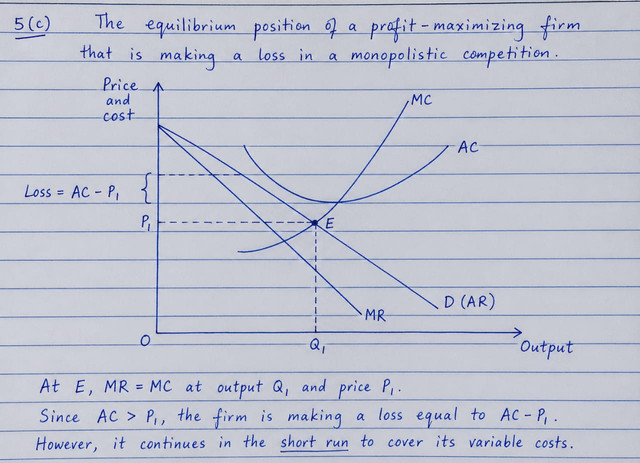
(5c)
============================
(6a)
(PICK ANY ONE)
Industrialization is the process by which a country develops industries and increases the production of goods through the use of machines, technology, and factories. It leads to economic growth and improved living standards.
OR
Industrialization refers to the transformation of an economy from one that depends mainly on agriculture to one based largely on manufacturing and industrial activities through the establishment of factories and modern production methods.
(6b)
(PICK ANY ONE)
Location of industry refers to the siting of an industry in a particular place or area while ocalization of industry refers to the concentration of many firms producing the same product in one geographical area.
OR
Location of industry is the choice of a suitable site where a firm is established while localization of industry occurs when several firms engaged in the same line of production are grouped together in a particular region.
(6c)
(i) A sawmill: A sawmill should be located near a forest or source of timber. This reduces the cost of transporting bulky logs and ensures a steady supply of raw materials.
(ii) A ceramic tile producing factory: A ceramic tile factory should be located near deposits of clay and other necessary minerals. This minimizes transportation costs and guarantees easy access to raw materials.
(iii) An egg-producing poultry farm: An egg-producing poultry farm should be located close to urban centres or major markets. This ensures quick distribution of eggs, reduces spoilage, and lowers transportation costs.
=============================
(8ai)
(PICK ANY ONE)
Import quotas are government-imposed restrictions on the quantity or value of goods that may be imported into a country within a specified period. By limiting the volume of imports, import quotas help to protect domestic industries from foreign competition, reduce pressure on foreign exchange reserves and encourage the consumption of locally produced goods.
OR
Import quotas refer to the maximum amount of a particular commodity that the government permits to be imported into a country during a given period. They are used as a trade control measure to regulate imports, protect local producers and correct balance of payments problems.
(8aii)
(PICK ANY ONE)
An embargo is a complete ban or prohibition placed by a government on the importation or exportation of certain goods or on all trade with a particular country. It is usually imposed for political, economic, military or security reasons and may be used to influence the policies or actions of another country.
OR
An embargo refers to a situation where a government totally restricts trade activities involving specific goods or a particular nation. The aim may be to protect national interests, enforce international sanctions or prevent the movement of strategic goods.
(8aiii)
(PICK ANY ONE)
Import licences are official documents or permits issued by the government authorizing individuals or firms to import specified goods into a country. They enable the government to monitor and regulate imports, control the quantity and type of goods entering the country and ensure compliance with trade regulations.
OR
Import licences are legal authorizations granted by appropriate government agencies allowing importers to bring certain goods into a country under stated conditions. They serve as a means of controlling imports, protecting local industries and preventing the importation of prohibited goods.
(8aiv)
(PICK ANY ONE)
Foreign exchange control refers to the system through which the government or central bank regulates the purchase, sale and use of foreign currencies within a country. It is designed to conserve scarce foreign exchange resources, ensure their efficient allocation and maintain stability in the country's external sector.
OR
Foreign exchange control is a government policy aimed at supervising and regulating foreign exchange transactions. Through this system, the authorities determine how foreign currencies are obtained and used in order to prevent excessive capital flight, promote economic stability and safeguard the balance of payments.
(8b)
(PICK ANY THREE)
(i) Providing export subsidies to exporters to reduce production costs and encourage greater exportation.
(ii) Granting tax reliefs and tax holidays to export-oriented industries to increase their profitability and competitiveness.
(iii) Improving transportation and communication facilities such as roads, railways, ports and airports to facilitate the movement of export goods.
(iv) Ensuring exchange rate stability to make locally produced goods more attractive in the international market.
(v) Establishing export promotion agencies to assist exporters in finding foreign markets and expanding their sales.
(vi) Providing adequate credit facilities and loans to exporters at low interest rates to increase production for export.
(vii) Improving the quality and standard of locally produced goods so that they can compete favourably in international markets.
(viii) Participating in international trade fairs and exhibitions to create awareness and demand for locally produced goods.
(ix) Removing unnecessary export restrictions and bureaucratic bottlenecks that discourage exporters.
(x) Encouraging industrialization and diversification of production to increase the range of goods available for export.
 |
|
 |
|