2026 NABTEB BIOLOGY ANSWERS (TYPE A)
BIOLOGY OBJ (TYPE A)
01-10: CDDBCACCBC
11-20: DCDABDAACB
21-30: ADBCCDACDD
31-40: BADCCDCACA
41-50: BCDDAADCDA
BIOLOGY OBJ (TYPE B)
01-10: AACBACADCC
11-20: BDADDCDADD
21-30: CBACACCBCC
31-40: DDADCDDBCA
41-50: CDBADCCDBD
BIOLOGY OBJ (TYPE C)
01-10: DDCDAADBDC
11-20: DACDCDDBCA
21-30: CDBADCCDAD
31-40: CDCBCDDCBA
41-50: ACCBDAACBA
BIOLOGY OBJ (TYPE D)
01-10: CDDADCDCCB
11-20: DBADCCDDDC
21-30: DAABCDDBCA
31-40: CBDAACBADC
41-50: ADCCDCACAB
===========================
NOTE: In this theory, Type A, B, C & D are the same but reshuffled. Use the answers provided to trace the correct questions in your booklet before answering.
WE USED TYPE-A IN SOLVING, SO TRACE FROM YOUR QUESTIONS BEFORE COPYING THE ANSWERS.
INSTRUCTIONS: ANSWER FOUR(4) QUESTIONS ONLY, AT LEAST ONE(1) FROM EACH SECTION
PART I
(1a)
(i) It allows division of labour, where different cells, tissues, and organs perform specialized functions efficiently.
(ii) It increases the efficiency and survival of organisms by enabling them to carry out complex life processes.
(1bi)
[TABULATE]
=COLONIAL ORGANISMS=
(i) They consist of many similar cells living together in a colony.
(ii) Individual cells can often survive independently when separated.
=FILAMENTOUS ORGANISMS=
(i) They consist of cells arranged end-to-end forming threads or filaments.
(ii) Individual cells usually cannot survive independently when separated.
(1bii)
(i) Colonial organism: Volvox
(ii) Filamentous organism: Spirogyra
(1c)
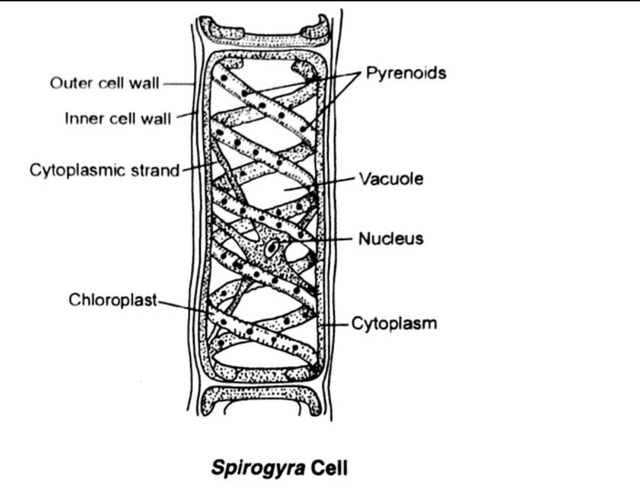
===========================
PART II
(2ai)
(i) It contains adequate nutrients/mineral salts for plant growth.
(ii) It has good water-holding capacity and good drainage.
(iii) It contains plenty of humus (organic matter) and supports soil organisms.
(2aii)
(i) Application of manure or fertilizers
(ii) Crop rotation (or bush fallowing)
(2b)
(i) Cutting: e.g. cassava, sugarcane, rose
(ii) Layering: e.g. cocoa, bougainvillea, mango
(iii) Grafting/Budding: e.g. citrus (orange), mango
(iv) Use of underground stems (suckers/rhizomes/tubers): e.g. banana (suckers), ginger (rhizome), yam (tuber)
(2c)
=ADVANTAGES=
(i) True-to-type offspring
(ii) Early maturity/early fruiting
(iii) Useful for plants with no viable seeds
=DISADVANTAGES=
(i) Low genetic variation
(ii) Easy transmission of diseases from parent plant
(iii) Low multiplication rate
===========================
(3ai)
Pollination is the transfer of pollen grains from the anther of a flower to the stigma of the same flower or another flower of the same species.
(3aii)
(i) Large and brightly coloured petals
(ii) Presence of scent and nectar
(iii) Pollen grains are sticky and heavy
(iv) Stigma is sticky and not feathery
(3bi)
(i) Produces food through photosynthesis
(ii) Carries out reproduction through flowers
(iii) Absorbs water and mineral salts from the soil
(iv) Provides support and transport of materials within the plant
(3bii)

===========================
PART III
(4a)
(i) Eye - for vision
(ii) Ear - for hearing and balance
(iii) Nose - for smell
(iv) Tongue - for taste
(4bi)
The eye defect is called myopia (short-sightedness). It is a condition in which a person can see nearby objects clearly but distant objects appear blurred. This defect occurs when the eyeball is too long or the eye lens is too powerful, causing light rays from distant objects to focus in front of the retina instead of directly on it.
(4bii)

(4ci)
The cerebrum controls voluntary actions, thinking, memory, and reasoning.
(4cii)
The cerebellum controls balance, posture, and coordination of body movements.
===========================
(5a)

(5bi)
Teeth are used for biting, cutting, tearing, crushing and grinding food into smaller particles. This increases the surface area of food for the action of digestive enzymes and makes swallowing easier.
(5bii)
The tongue mixes food with saliva to form a bolus and helps in swallowing. It also contains taste buds which enable the animal to detect different tastes in food.
(5biii)
Saliva moistens and lubricates food, making it easier to swallow. It also contains the enzyme salivary amylase (ptyalin) which begins the digestion of starch into simpler sugars.
(5biv)
The stomach stores and churns food, mixing it with gastric juice. It also secretes enzymes and hydrochloric acid for the digestion of proteins and destroys harmful microorganisms present in food.
===========================
*PART IV*
(6ai)
Variation is the occurrence of differences among individuals of the same species in terms of physical appearance, physiological processes, behavioral patterns, and genetic constitution.
(6aii)
=CONTINUOUS VARIATION=
(i) Height in humans
(ii) Body weight
(iii) Skin colour
(iv) Intelligence level
=DISCONTINUOUS VARIATION=
(i) Blood group (A, B, AB, O)
(ii) Ability to roll the tongue
(iii) Sex (male or female)
(iv) Fingerprint pattern
(6aiii)
(i) It enables organisms to adapt to changes in the environment.
(ii) It increases the chances of survival of a species.
(iii) It provides the raw materials for evolution and natural selection.
(6bi)
Sex-linked genes are genes located on the sex chromosomes (X or Y chromosomes) and whose inheritance is associated with sex. Traits controlled by such genes are called sex-linked traits.
(6bii)
Dominance is the ability of one allele of a gene to express itself in the presence of another contrasting allele, thereby masking the effect of the recessive allele.
(6biii)
A hybrid is an offspring produced by crossing two genetically different individuals or varieties of the same species.
 |
|
 |
|